
Almond Classification



Californian almonds are marketed globally via three characteristics including:
Variety
Grade
Size
These three characteristics will dictate the most appropriate almond to purchase depending on the final use and the price level California will be demanding.
Variety & Size
Varieties are categorised into five broad classifications based on certain characteristics such as size and shape. Around 90% of Californian production falls into the three major classifications of Nonpareil, California/Carmel Type and Mission Type. With these three classifications there are over thirty almond varieties. Customers will choose what variety to purchase based on final use of the product, prize, processing ability and appearance.
Californian packers will size their material for buyers with the smallest size (sold in quantity) being a 36/40 and the largest being an 18/20. The sizing is sorted based on the number of kernels per ounce. The larger the size the more expensive the commodity and once again buyers will be purchasing based on their final need for the product.


Grades
Varieties are categorised into five broad classifications based on certain characteristics such as size and shape. Around 90% of Californian production falls into the three major classifications of Nonpareil, California/Carmel Type and Mission Type. With these three classifications there are over thirty almond varieties. Customers will choose what variety to purchase based on final use of the product, prize, processing ability and appearance.
Californian packers will size their material for buyers with the smallest size (sold in quantity) being a 36/40 and the largest being an 18/20. The sizing is sorted based on the number of kernels per ounce. The larger the size the more expensive the commodity and once again buyers will be purchasing based on their final need for the product.

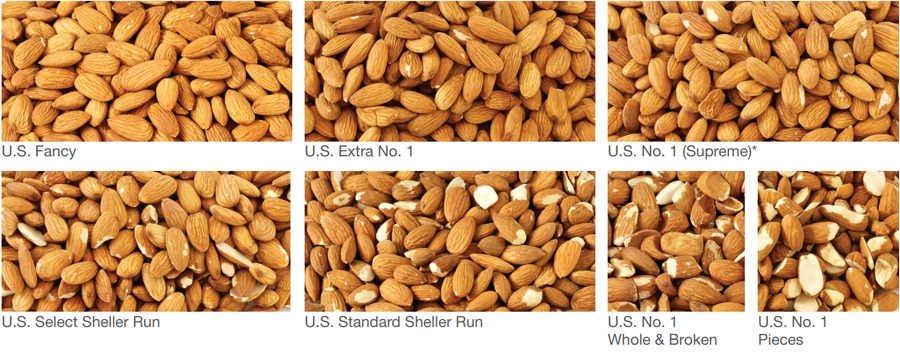
(Pending approval from the almond Board)